DESIGN PRINCIPLES / FINAL PROJECT – VISUAL ANALYSIS
01/11/2022 - 30/11/2022 / Week 10 - Week 14
Chew Zhi Ern / 0358995
Design Principles / Bachelor of Design (Honours) in Creative Media / Taylor's University
Final Project / Visual Analysis
Chew Zhi Ern / 0358995
Design Principles / Bachelor of Design (Honours) in Creative Media / Taylor's University
Final Project / Visual Analysis

INSTRUCTION
<iframe src="https://drive.google.com/file/d/1OIM4tYsZAdpgfMrFR6bjpiNX8D0I90_M/preview" width="640" height="480" allow="autoplay"></iframe>
LECTURES
Lecture 8: Visual Analysis
Visual Literacy: (according to the American Library Association website)
- A set of abilities that enables an individual to effectively find, interpret, evaluate, use and create images and visual media.
- An interdisciplinary concept and plays an important role across higher education in the arts, humanities, science, technology, business and more.
Visual Analysis:
- A method of understanding design that focuses on the visual elements and principles.
- In its strictest definition -a description and explanation of visual structure for its own sake.
- The purpose of visual analysis can also recognise the choices that a designer made in creating the design, as well as to better understand how the formal properties of a design communicate ideas, content, or meaning.
- Is a critical part of visual literacy, a skill that helps people read and critically interpret images, whether in a museum, on social media, in entertainment, advertising, or the news.
- As citizens of the 21st century, we are constantly confronted with visual media. Practisingvisual analysis sharpens critical judgment skills and helps people seek out answers instead of passively receiving information.
Three phases of visual analysis:
- Phase 1 - Observation
- This means closely looking at and identifying the visual elements of a design, trying to describe them carefully and accurately in your own words. Do not read beforehand about the design at all.
- It is about looking, thinking, and finding good language to communicate what you notice.
- Phase 2 - Analysis
- Requires you to think about your observations and try to make statements about the work based on the evidence of your observations.
- Think about how the specific visual elements that you’ve identified combine together to create a whole, and what effect that whole has on the viewer.
- Phase 3 - Interpretation
- In this final phase, your observations, description, and analysis of the work are fused with facts about the design work (and in some cases the designer) and historical context that you find in trustworthy published sources.
 |
| Figure a. Artwork by Helen LI https://www.pinterest.com/pin/70437486172593/ |
I have chosen Figure a as my selected design because I have strong feelings about this design. It just exactly portrays me like the girl in the glass, who often felt anxious but not expressing it to others, instead of closing myself down and digesting it myself. Some of my sources of stress include parents' expectations, negative thoughts or feelings, school demands and frustrations as well as having too high expectations of myself.
Phase 1: Observation
Figure a is presented in portrait mode. The primary colours shown in the visual components are green, beige, yellow and blue which are reflected in the girl and orange is used as the colour in the glass. All in all, the design is colourful. There are three layers in total in the design, which are the background, the girl's portrait and the glass with a little girl in it held by the girl. Actual straight and curved lines were used as the artwork's main structural elements which are the patterns reflected on her clothing and the shapes in the background. A feature of a girl that the designer intends to convey prominence is placed in the cup and in the center of the whole piece.
Phase 2: Analysis
The key principles of this perfectly balanced design are emphasis, repetition and harmony. The glass covered the girl's right eye, and the other eye was more prominent and brighter. The repetition of the shapes of lightning bolts and water droplets is found on the blouse of the girls in the design. The darker background of blue makes the subject stand out more and plays an important role in balancing off the empty space which complements the overall design. The overall composition is unified, there are not many illustration objects, and the arrangement is comfortable for the viewers. There is a scale in the layout of the character in the glass and creation hierarchy, in which first we see the left eye of the portrait of the girl in the background because the girl's eyes have bright shades, and as the eye travel, we can see a girl in the glass. This design is simple but does not lose the emotion it is trying to express.
Phase 3: Interpretation
This is an illustration artwork designed by Helen Li. Helen Li is an Australian illustrator who currently living and working in Warsaw, Poland. She holds an MFA in Illustration from the School of Visual Arts, New York City. When she’s not drawing, she’s tattooing, training in MMA and exploring the wild with her spouse and dog. One year after graduation, she got her first illustration job at Google. (http://helenofkoi.com/about/)
The colour scheme in figure a is very soothing. There is a girl holding a glass that depicts an anxious girl in it to make sure giving extra visual weight to the emphasis.
 |
| Other artwork by Helen Li https://pin.it/23hXl3N |
Week 10: Introduce to Final Project
Week 11: Discussion on Phases 1 & 2
This week, we discussed our observations and analysis (Phases 1 & 2) in detail. We also had a progress checking session to ensure we were on the right track with our final project.This week, we also have the progress checking session as well.
Week 12: Phase 3 Discussion and Showing Initial Idea
Week 13: Discuss on the Developed Idea
As usual, we had a feedback session where we shared our developed ideas. Dr. Jinchi provided constructive feedback and guidance to help us improve and finalise our designs.
Week 14: Finalised Idea and Submission
RECAP
Phase 1: Observation
Observation means closely looking at and identifying the visual attributes of an artwork, trying to describe them carefully and accurately in your own words. The observation phase encourages students to look, think, and find good language to communicate what they notice, all without reading about the work.
Phase 2: Analysis
Analysis requires you to think about your observations and try to make statements about the work based on the evidence of your observations—akin to using close reading to formulate an argument about a text. This phase encourages students to think about how the specific visual elements they’ve identified combine together to create a whole, and what effect that whole has on the viewer.
Phase 3: Interpretation
The difference between visual analysis and interpretation is research. To use visual analysis as the basis for an interpretation of an artwork, have students formulate research questions based on what they have observed and argued thus far. In this final phase (usually for a formal paper or research proposal), students balance observations, descriptions, and analysis with facts about the artist and historical context from trustworthy published sources.
VISUAL RESEARCH


 |
| https://pin.it/5VGf7Ip |
 |
| https://pin.it/49ZhUql |
 |
| https://pin.it/wdd8mRQ |
 |
| https://pin.it/6kBQO1K |
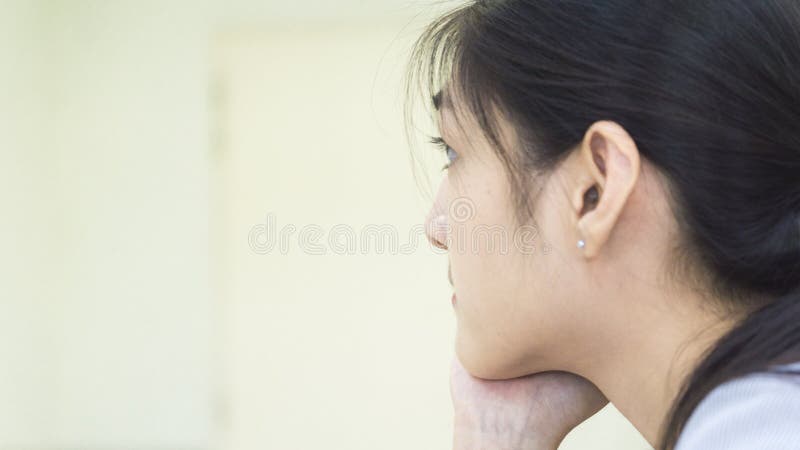
 Side face of a girl |
| https://thumbs.dreamstime.com/b/girl-see-something-side-face-106133036.jpg |
IDEA EXPLORATION AND DESCRIPTION
In the domain of inflation, women have persistently higher expectations than men. We argue that traditional gender roles are a significant factor in generating this gender expectations gap as they expose women and men to different economic signals in their daily lives.
Women feel more frustrated than men by the gendered expectations placed on them at work, even when those expectations appear to signal women's virtues and are seen as important for workplace advancement, according to new Cornell University research.
Stress and anxiety have become uncomfortably common these days. Negative emotions, mental fatigue and lack of control over a situation have been a great source of stress for us as well as for people around us. As per studies, this mental condition more often than not spirals out of control and makes things worse. Some people manage to deal with it nicely, while others just keep on carrying the burden within themselves.
Women and men both manage stress differently. As per the American Psychological Association, women are more stressed as compared to men. Stress even leads to other physical problems like headaches, exhaustion and irritability in women. They are even more prone to depression and anxiety.
Therefore, I would like to highlight the unequal treatment of women based on high expectations from the society that leads to pressure nowadays, such as workplace stress caused by workload, maintaining expected beauty standards, performing traditional roles in the home as well as achieving great careers and more.
 |
| Figure 1. |
This design concept is like buying a "fake mask" to disguise themselves.
 |
| Figure 2. Another design |
 |
| Figure 3. Changes from Figure 1 |
 |
| Figure 4. Coloured Work |
 |
| Figure 5. Final Outcome |
FINAL OUTCOME & RATIONALE
|
Final Work for Visual Analysis |
The concept of this design was to show the inner and outer emotions of a woman who suffers from the high expectations of today's society which leads to stress. There are two huge differences in mood and feeling in the above design. The face facing on the left shows the perfect side of herself which has her makeup on and always puts up a smile. Butwhen it comes to her self time, she just closes herself, does not want to associate with others, and has bad emotional thoughts at the same time. Even sometimes she drinks or takes drugs to control her emotions too. Hence, there were some cracks inside there. The grid in the figure acts as a means of shading herself and the charger plays a role that conveys she recharges herself by self-digestion in the time.
FEEDBACK
Week 11: Dr. Jinchi thinks that I have gotten a good understanding as well of what is to be in each different phase. To improve, need to add the details of how we can locate those elements and also the principles in the design.
Week 12: First should identify the inequality that I want to address. Related the rationale to the theme that I have chosen. Expand the ideas. Could show more about the face to give a stronger message.
Week 13: The original idea is better than the second. Make the whole composition smaller to avoid being crowded. Would need to show some kind of indication.
Week 14: Some elements should change their placement.
WEEKLY CHANGES & REFLECTION
Weekly Changes
Week 10: Selected a design to conduct a visual analysis (phases 1 & 2) of the design.
Week 11: Make some elaboration and changes in phases 1 & 2. Start to develop in phase 3 and sketch ideas.
Week 12: Edited the description and furthermore, another idea was proposed (Figure 2).
Week 13: Add some elements to complete the composition.
Week 14: Dr. Jinchi's recommendations led to minor adjustments. Refined and finished the task.
Reflection
Visual analysis plays a very important role in the design, because it allows me, as a beginner in design, to better understand the considerations and design principles that have been used in a piece of work. In addition to learning to analyze visuals, this is truly a great opportunity for creative expression. Unfortunately, I am actually not very satisfied with the outcome of this work. I found that there is still a lot of room for improvement in my expression and operation skills, which also made me determined to practice and hone more in my spare time.
OTHER REFERENCES


Comments
Post a Comment